系列海报Poster Series
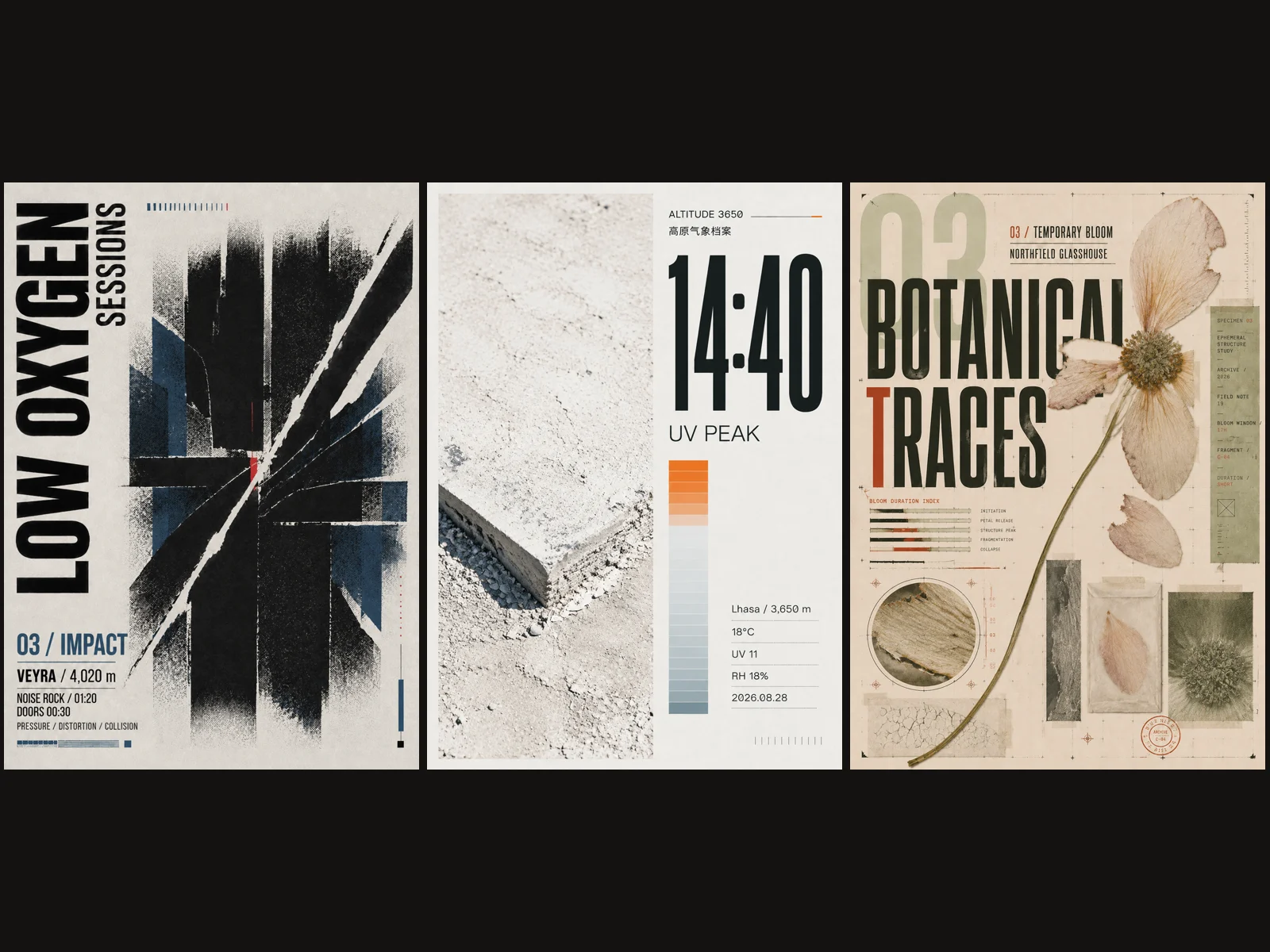
三组海报,三种毫不相干的视觉语言:生成式抽象、数据摄影、标本拼贴。字体、色彩、材质、气质没有一样共通。放进同一条作品,是因为做法是同一套:做系列海报,先定一个控制变量,然后让三张只在那个变量上变化,其余全部锁死。变量选对了,三张摆在一起自己成序列;选错了,就是三张风格接近的单张海报硬凑在一块,看着像一组,读起来不是。下面三段各说一个变量是怎么定的。Three sets of posters in three unrelated visual languages: generative abstraction, data photography, specimen collage. Nothing is shared: not the type, not the colour, not the material, not the temperament. They sit in one entry because the method is one method. To make a series, fix a controlled variable, let the three change only along it, and lock everything else. Get the variable right and the three assemble themselves into a sequence. Get it wrong and you have three stylistically similar one-offs pushed together, which look like a set and do not read as one. The three sections below each say how one variable was chosen.
- 角色 / Role
- 平面设计 / Graphic design
- 内容 / Content
- 3 个系列,9 张海报 / Three series, nine posters
- 载体 / Format
- 印刷 · 墙面 · 展陈 / Print, wall, exhibition
- 状态 / Status
- 自主项目 / Self-initiated
密度可以排进节目单Density goes on the running order
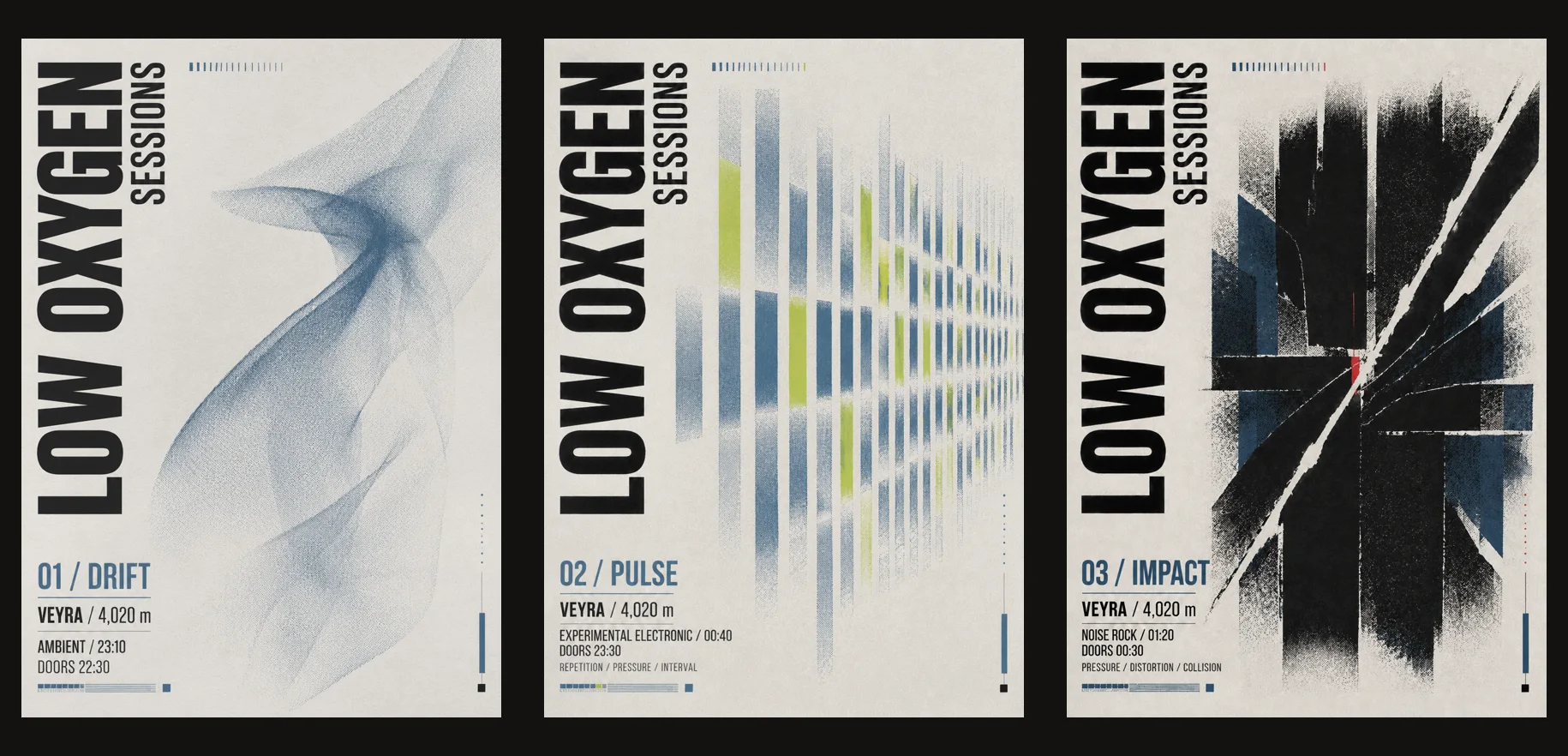
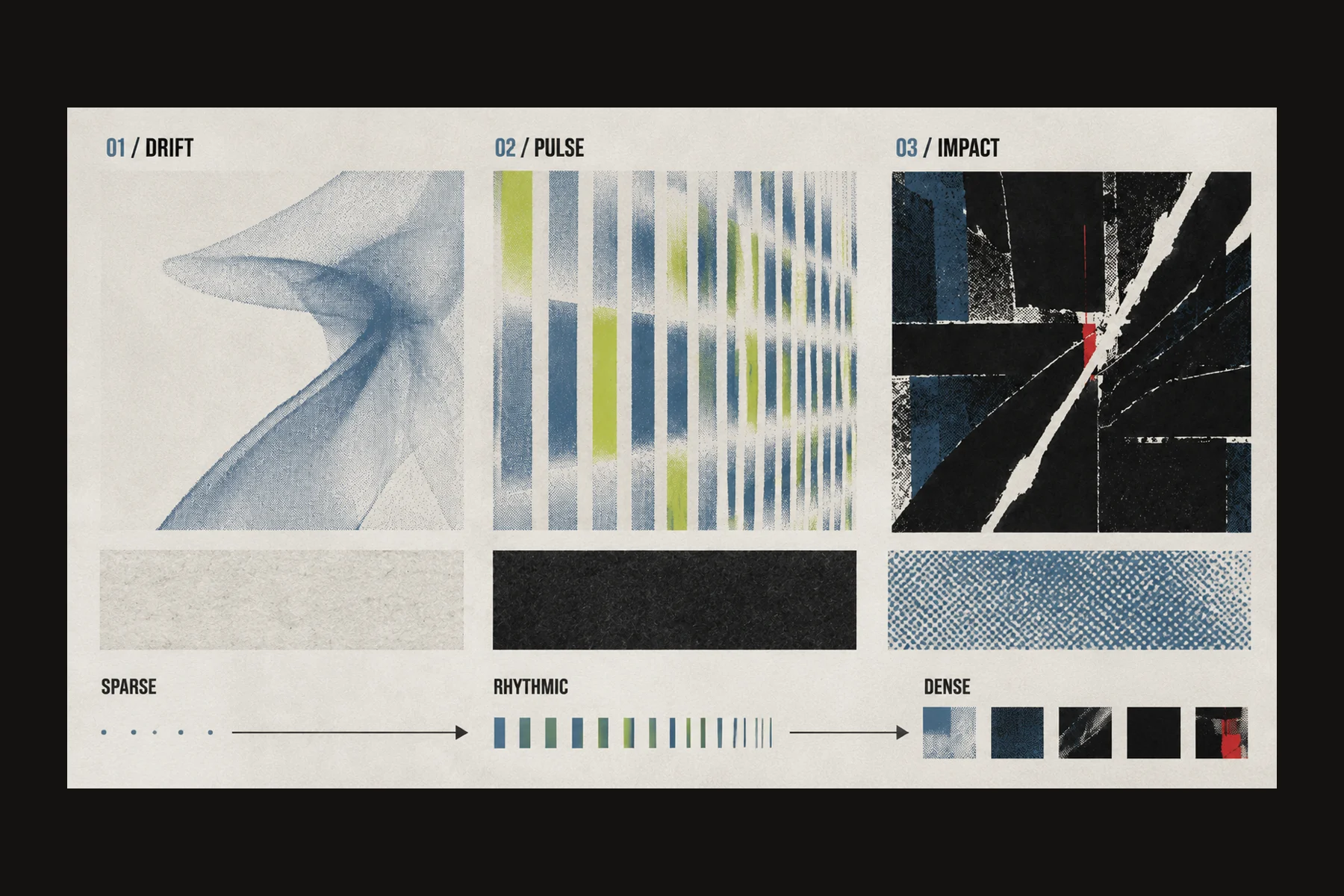
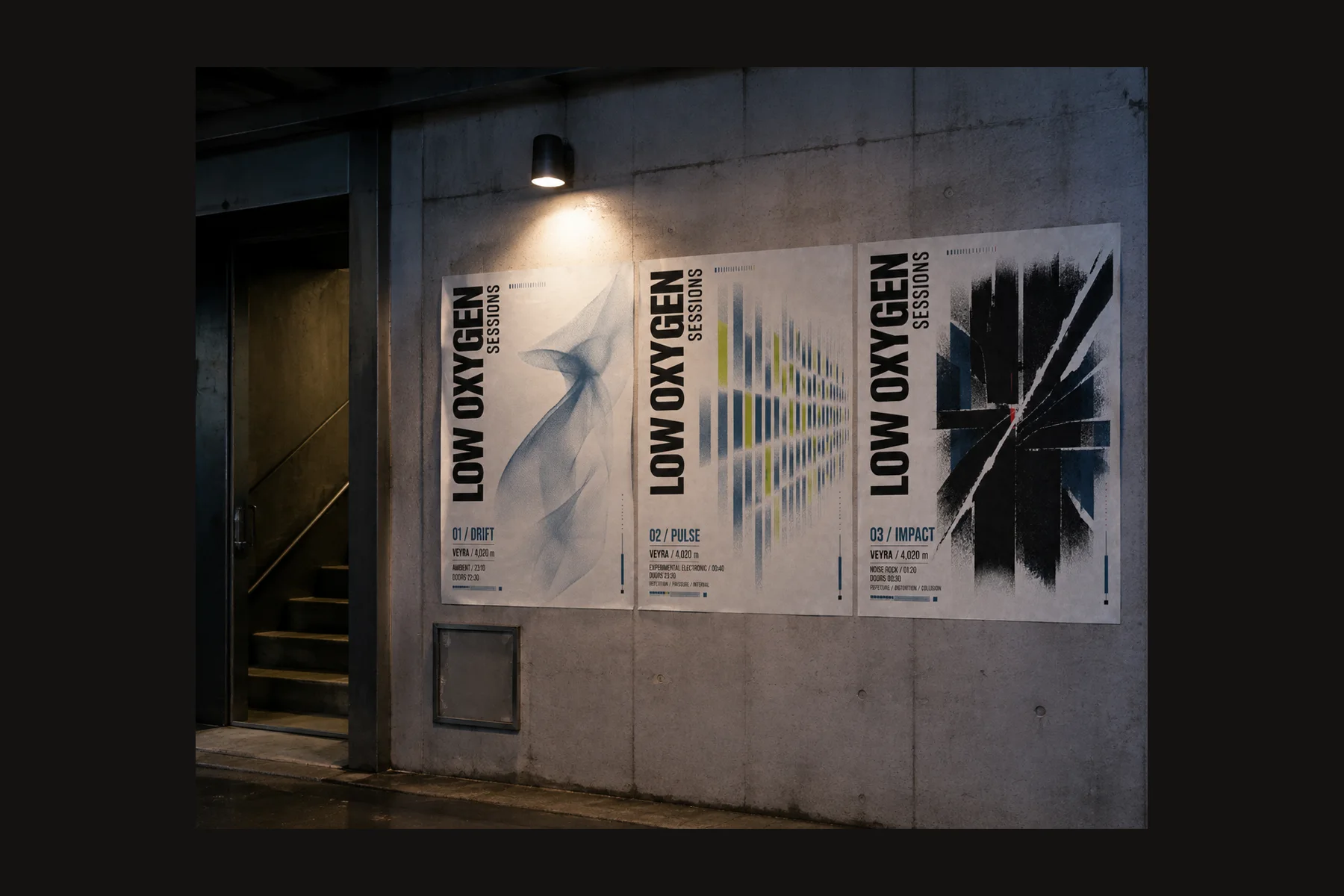
LOW OXYGEN SESSIONS 是同一个场地的三场演出:Ambient 23:10、Experimental Electronic 00:40、Noise Rock 01:20。变量是画面密度,跟着音乐走:DRIFT 是一团快要散开的纤维,PULSE 是排成阵列的色块,IMPACT 是撞碎的黑。三张的字体、栏位、信息块位置一格没动,只有那一层图形在变。系统板上把这条写死了:SPARSE → RHYTHMIC → DENSE。场次时间本身也是递进的,越晚的场越吵,密度跟着往上走,所以这条序列不用解释,看节目单就懂了。LOW OXYGEN SESSIONS is three nights at one venue: Ambient at 23:10, Experimental Electronic at 00:40, Noise Rock at 01:20. The variable is visual density, and it follows the music. DRIFT is a mass of fibre about to come apart, PULSE is colour laid out in an array, IMPACT is black hit until it breaks. Type, columns and the position of every information block hold still across all three; only the graphic layer moves. The system sheet fixes it: SPARSE, RHYTHMIC, DENSE. The set times climb too, the later slot being the louder one, so the density rises with them and the sequence needs no explaining. The running order gives it away.
01 / DRIFT    AMBIENT / 23:10                SPARSE
02 / PULSE    EXPERIMENTAL ELECTRONIC / 00:40  RHYTHMIC
03 / IMPACT   NOISE ROCK / 01:20               DENSE

VEYRA / 4,020 m — 场地在海拔四千米,所以叫 LOW OXYGEN一天的读数就是版式A day of readings is the structure
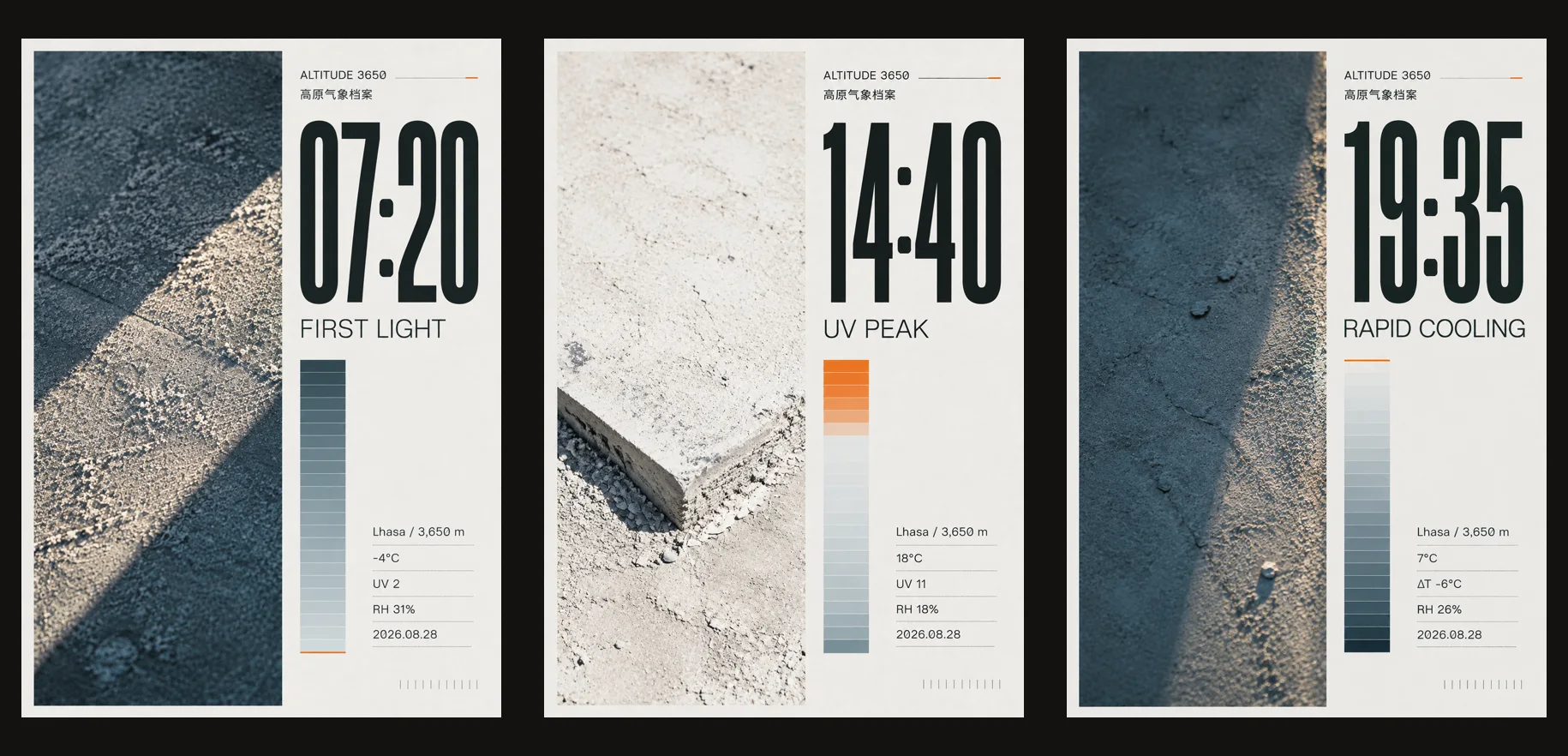
ALTITUDE 3650 记的是拉萨一天里的三个时刻:07:20 零下 4 度、紫外线 2 级;14:40 升到 18 度、紫外线 11 级;19:35 回落到 7 度,六小时内降了 6 度。变量就是数据本身,所以版式一格没动,动的是那根刻度条。它跟着紫外线值变色,正午整条翻成橘,早晚回到冷灰蓝,填到第几格也跟着读数走。不读数字,光看颜色和它填到哪儿,就知道这是一天里的哪一段。高原昼夜温差既是这组海报的内容,也是它的形式。ALTITUDE 3650 records three moments in one Lhasa day: minus four degrees and a UV index of 2 at 07:20; eighteen degrees and a UV index of 11 at 14:40; back to seven degrees at 19:35, six degrees lost in six hours. The variable is the data, so the layout never shifts and the scale bar does all the moving. It takes its colour from the UV reading, turning orange across its whole length at midday and returning to a cold grey-blue morning and evening, and it fills to a level that follows the number. Without reading a figure, the colour and the fill tell you which part of the day this is. The temperature swing at altitude is both what this set is about and the form it takes.
07:20  FIRST LIGHT      -4°C   UV 2    RH 31%
14:40  UV PEAK          18°C   UV 11   RH 18%
19:35  RAPID COOLING     7°C   dT -6   RH 26%

Lhasa / 3,650 m — 2026.08.28同一套版式,三种采集One layout, three kinds of collecting
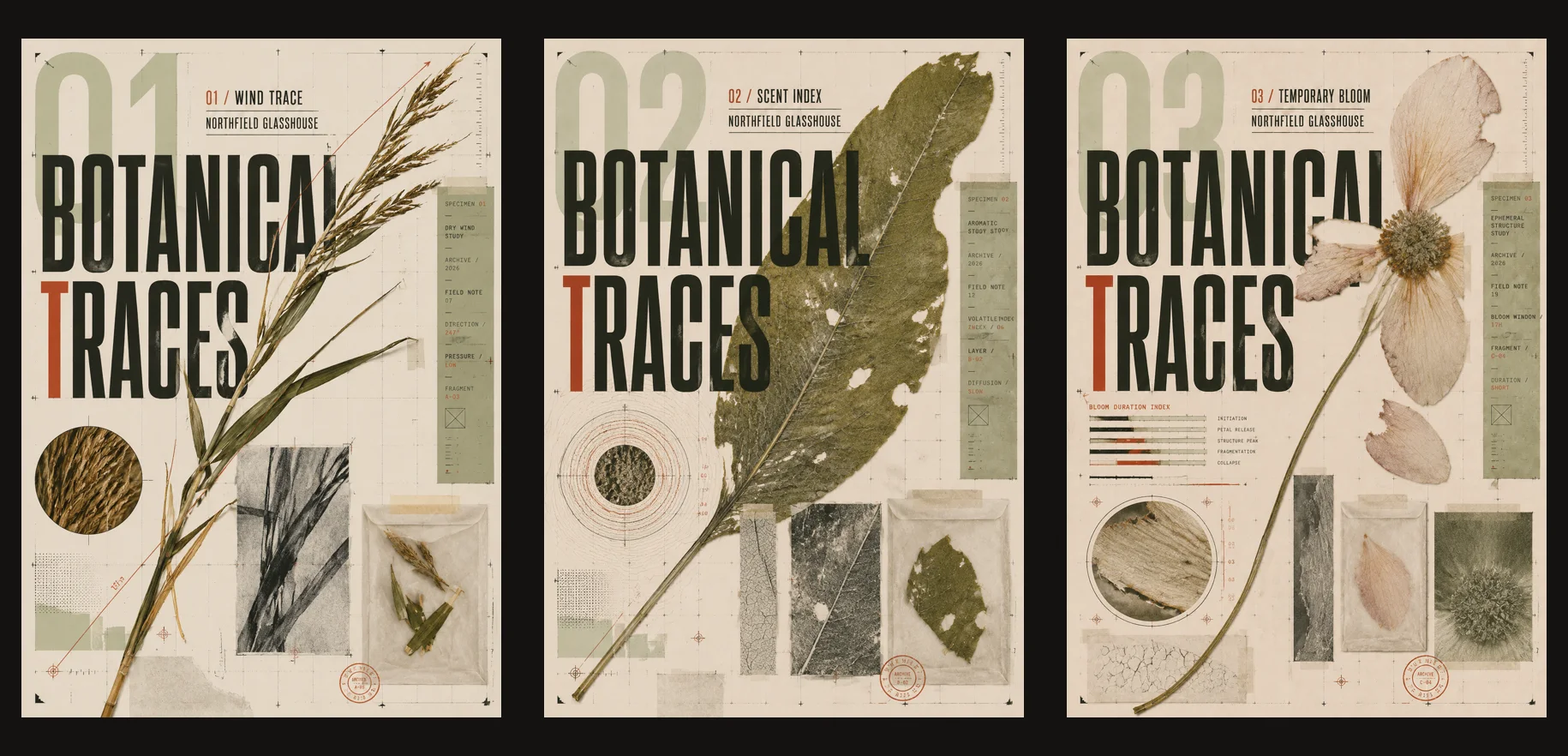
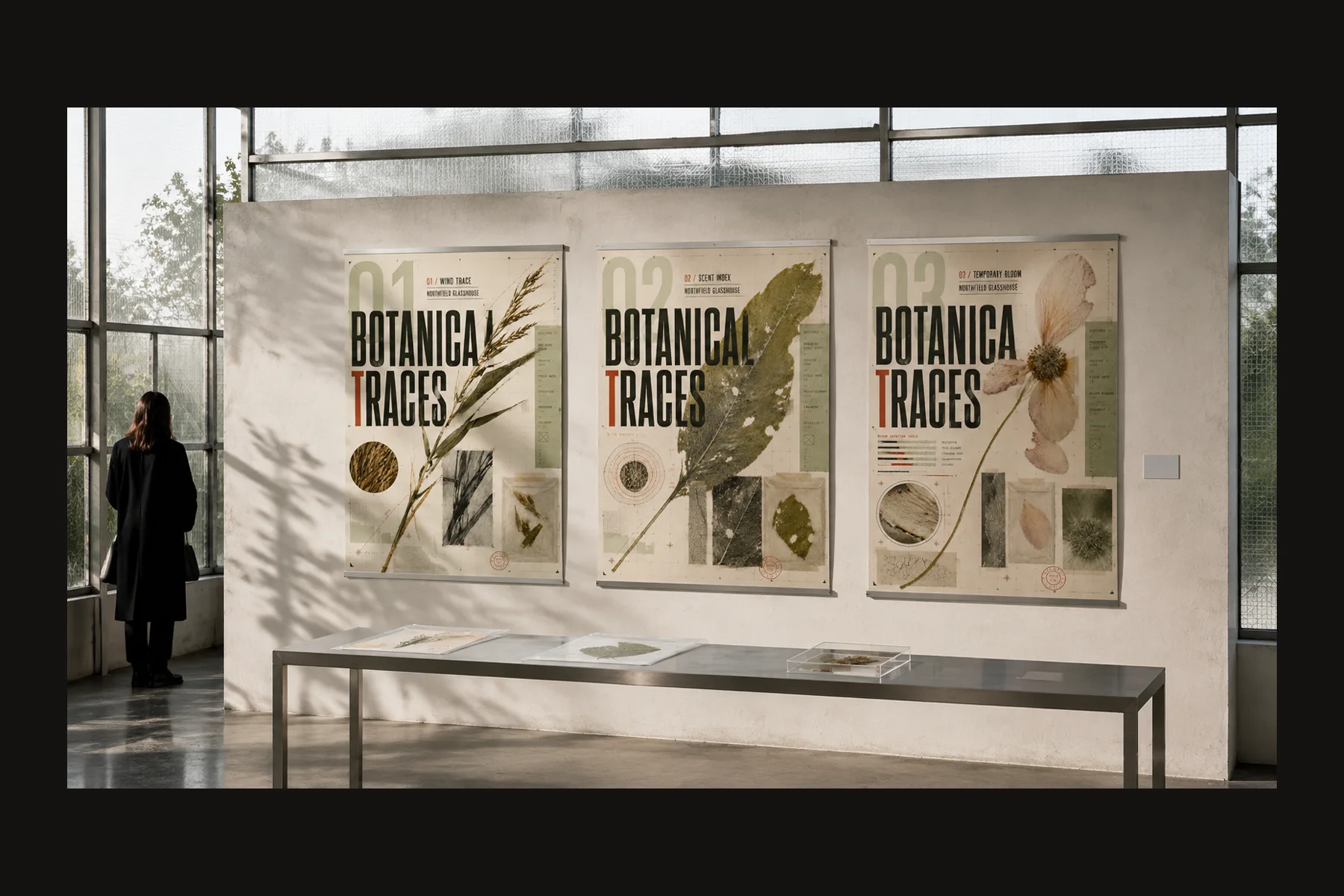
BOTANICAL TRACES 是一间温室的标本档案:01 风痕、02 气味索引、03 花期。变量是采集对象,承载它的是一整套档案版式:标本编号、田野记录、层位、压制日期、标本袋、印章、方格底纸,每一张的位置都固定。标题三张都压在同一个位置,然后被标本本身遮掉一部分,遮多少由标本的形状决定。草叶细,只割断一两个字母;阔叶和花大,能吃掉半个词。这是三组里唯一让变量去干扰版式的一组,干扰有边界:字被压住,但没有一张读不出来。BOTANICAL TRACES is a glasshouse archive: 01 wind traces, 02 scent index, 03 flowering period. The variable is what was collected, carried by a full archival layout: specimen number, field notes, horizon, pressing date, specimen envelope, stamp, gridded backing. Every element holds its position. The title sits in the same place on all three and is then partly covered by the specimen itself, by however much the specimen's shape covers. Grass blades are thin and cut through a letter or two; broad leaves and flowers can eat half a word. This is the only one of the three that lets the variable interfere with the layout, and the interference has a limit. The type gets covered. None of the three becomes unreadable.
三种语言,一套方法Three languages, one method
把这三组放进同一条作品,理由是它们一点都不像:冷蓝的生成图形、克制的数据摄影、暖调的标本拼贴,摆在一起像三个人做的。共同的只有动手之前那一步,先回答「这三张之间到底什么在变」。密度、读数、采集对象,三个答案毫无共同点,但都是先有答案才有画面。变量定下来之后,风格是跟着内容长出来的。所以这三组能同时出自一双手而不显得分裂:方法一致,语言不必一致。These three sit in one entry because they look nothing alike: cold blue generative graphics, restrained data photography, warm specimen collage, which together read as three people's work. What they share is the step before anything gets drawn, answering what exactly changes between these three. Density, readings, the thing collected: three answers with nothing in common, all of them arrived at before an image existed. Once the variable is fixed, the style grows out of the content. That is how three sets come from one pair of hands without reading as split. The method is the same; the languages do not have to be.